Monte Carlo & Molecular Dynamics
I am a fourth-year Ph.D. candidate in the Micro and Nano Mechanics Group at Stanford University, advised by Prof. Wei Cai. Here is my CV and resume.
I develop theory and algorithms for importance sampling to (1) accelerate rare events and (2) estimate their dynamic properties. The method biases Langevin dynamics with a graph neural network committor and reweights paths to keep rates unbiased despite committor error.
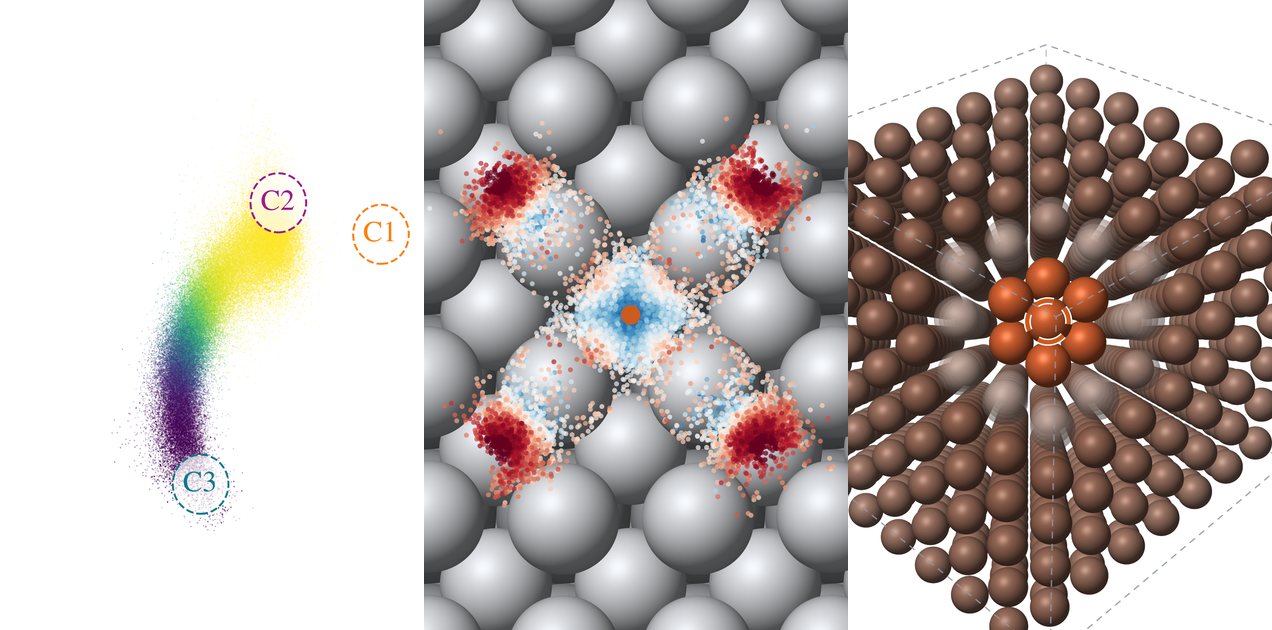
I have applied it to rare events in up to 2055 dimensions: alanine dipeptide in vacuum (d = 66), Pt adatom diffusion on Pt(001) (d = 387), and vacancy migration in bcc Fe (d = 2055). Check out Accelerated Atomistic Simulations.
With collaborators, I model strain in Si–Ge–Sn nanowires and dislocation mobility in fcc Cu, and develop Burgers-vector identification for dark-field X-ray microscopy.
Education
-
Stanford University
Ph.D. in Mechanical Engineering
2023 - Present
Advisor: Prof. Wei Cai
-
Korea Advanced Institute of Science and Technology (KAIST)
B.S. in Mechanical Engineering
B.S. in Electrical Engineering
2019 - 2023
Awards and Honors
-
James D. Plummer Graduate Fellowship
Stanford University (2023 - 2024)
-
National Science & Technology Scholarship
Korea Ministry of Science and ICT (2019 - 2023)
-
Global Leadership Award
KAIST (2023)
-
President's Undergraduate Research Award
Georgia Institute of Technology (2022)
-
KSME | SEMES Open Innovation Challenge
The Korean Society of Mechanical Engineers (KSME) | SEMES (2022)
-
Young Engineers Honors Society
National Academy of Engineering of Korea (2020)
-
Guwon Academic Excellence Scholarship
Guwon Scholarship Foundation (2020)
-
KAIST Academic Excellence Scholarship
KAIST (2020)
Service and Teaching Activities
-
Summer Undergraduate Research Fellow Mentor
Machine Learning Interatomic Potentials for Large Scale Molecular Dynamics (Summer 2025)
-
Teaching Assistant
ME 123: Computational Engineering (Spring 2026)
ME 346A: Introduction to Statistical Mechanics (Winter 2025)
-
Undergraduates Mentored
Saul Eduardo Perez Herrera (Summer 2025) → National Autonomous University of Mexico
Eitan Cohen Arazi (Winter 2024) → University of Buenos Aires
Publications
-
Accelerated Langevin Dynamics Simulation via Neural Network–Driven Importance Sampling
, Wei Cai
-
Accelerated Markov Chain Monte Carlo Simulation via Neural Network–Driven Importance Sampling
, Wei Cai
-
Smart Filtering Facepiece Respirator with Self-Adaptive Fit and Wireless Humidity Monitoring
Kangkyu Kwon, Yoon Jae Lee, Yeongju Jung, Ira Soltis, Yewon Na, Lissette Romero, , Nathan Rodeheaver, Hodam Kim, Chaewon Lee, Seung-Hwan Ko, Jinwoo Lee, Woon-Hong Yeo
Biomaterials (2025) Link
-
Stretchable Wearable Wireless Bioelectronics Using All Printed Pressure Sensors and Strain Gauges
Nathan Zavanelli, Yoon Jae Lee, , Allison Bateman, Matthew Guess, Hyeonseok Kim, Dinesh K Patel, Woon–Hong Yeo
Advanced Materials Technologies (2024) Link Journal Cover
-
Advances in Electrochemical Sensors for Detecting Analytes in Biofluids
Jimin Lee, , Ira Soltis, Sung Hoon Lee, Woon-Hong Yeo
Advanced Sensor Research (2023) Link Journal Cover
Conferences
Includes upcoming events
-
Error-Correcting Importance Sampling for Descriptor-Free Acceleration of Rare Events
HAI Fall Conference 2026: Confronting Our AI Future, Stanford HAI
Stanford, CA (Oct. 2026)
-
Error-Correcting Importance Sampling for Descriptor-Free Acceleration of Rare Events
Empirical Methods in the Age of AI, Stanford Causal Science Center & Stanford Data Science
Stanford, CA (Oct. 2026)
-
Accelerated Langevin Dynamics Simulation via Neural Network-Driven Importance Sampling
ChemAI NYC 2026, Simons Center for Computational Physical Chemistry, New York University
New York, NY (June 2026)
-
Accelerating Langevin Dynamics Simulation of Rare Events
ICME Research Symposium 2026, Stanford Institute for Computational & Mathematical Engineering
Stanford, CA (May 2026)
-
Accelerating Rare Event Simulations
AI+Science: Accelerating Discovery, Stanford HAI
Stanford University (May 2026)
-
Neural Network Driven Importance Sampling for Accelerated Kinetic Monte Carlo of Rare Events
MRS Spring Meeting, Materials Research Society
Honolulu, HI (Apr. 2026)
-
Accelerating Monte Carlo Simulation of Rare Events by Importance Sampling using Neural Network
DAMOP 2025, The 56th Annual Meeting of the APS Division of Atomic, Molecular and Optical Physics
Portland, OR (June 2025) Link
-
Smart Filtering Facepiece Respirator with Adaptive Fit and Wireless Humidity Monitoring
BMES 2022 Annual Meeting, Biomedical Engineering Society
San Antonio, TX (Oct. 2022)
-
Stretchable Pressure Sensor using Inter-Digitated Serpentine Structure
Gordon Research Conference, Multifunctional Materials and Structures
Ventura, CA (Sept. 2022) Link
Patents
-
A method and apparatus for classification of subtypes of cells with morphological and motility features using hybrid learning
Hyunjong Shin, Chanhong Min, Minwoo Kang, Hyuntae Jeong, Taeyoon Kwon,
KR Patent 10-2762542 (2025) Link
Research
Theory
Importance sampling that turns biased simulations into estimates of the original transition rates.
Accelerated Langevin Dynamics
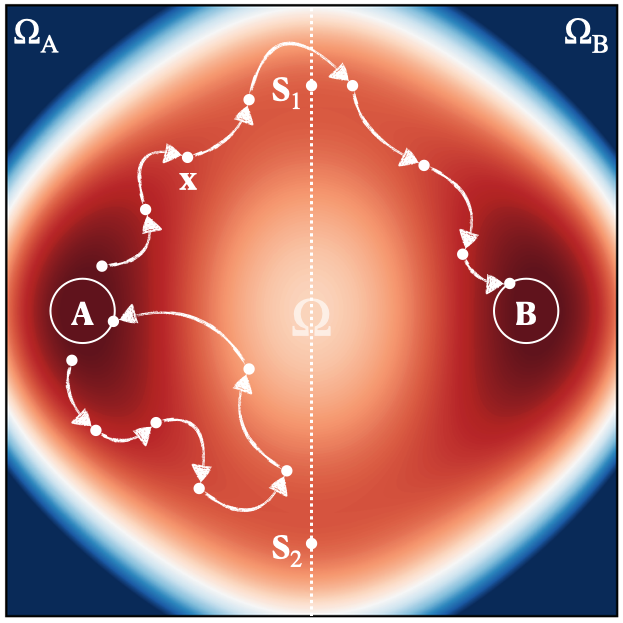
A neural-network importance function tilts each Langevin step toward rare transitions, and path weights absorb its errors, so the success-probability estimate stays unbiased for any positive importance function while a branching random walk keeps the weights bounded.
Accelerated MCMC
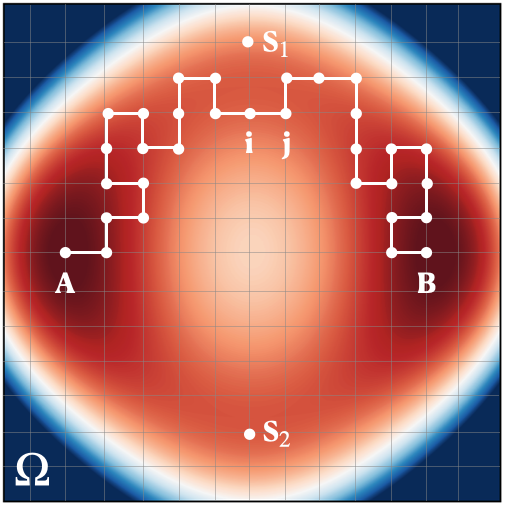
A neural network learns a bias potential in log space that steers lattice Monte Carlo through rare transitions, while path reweighting and a branching random walk keep the success-probability estimate unbiased; auxiliary failure and success states keep the formulation robust to grid refinement.
Applications
The methods at work on atomistic and biomolecular rare events.
Accelerated Atomistic Simulations
Neural-network importance sampling of Langevin dynamics reproduces reference rates and resolves competing channels, including an unanticipated long jump, for the LJ7 cluster and, in a revised manuscript in preparation, a Pt adatom on Pt(001) and a vacancy in bcc iron.
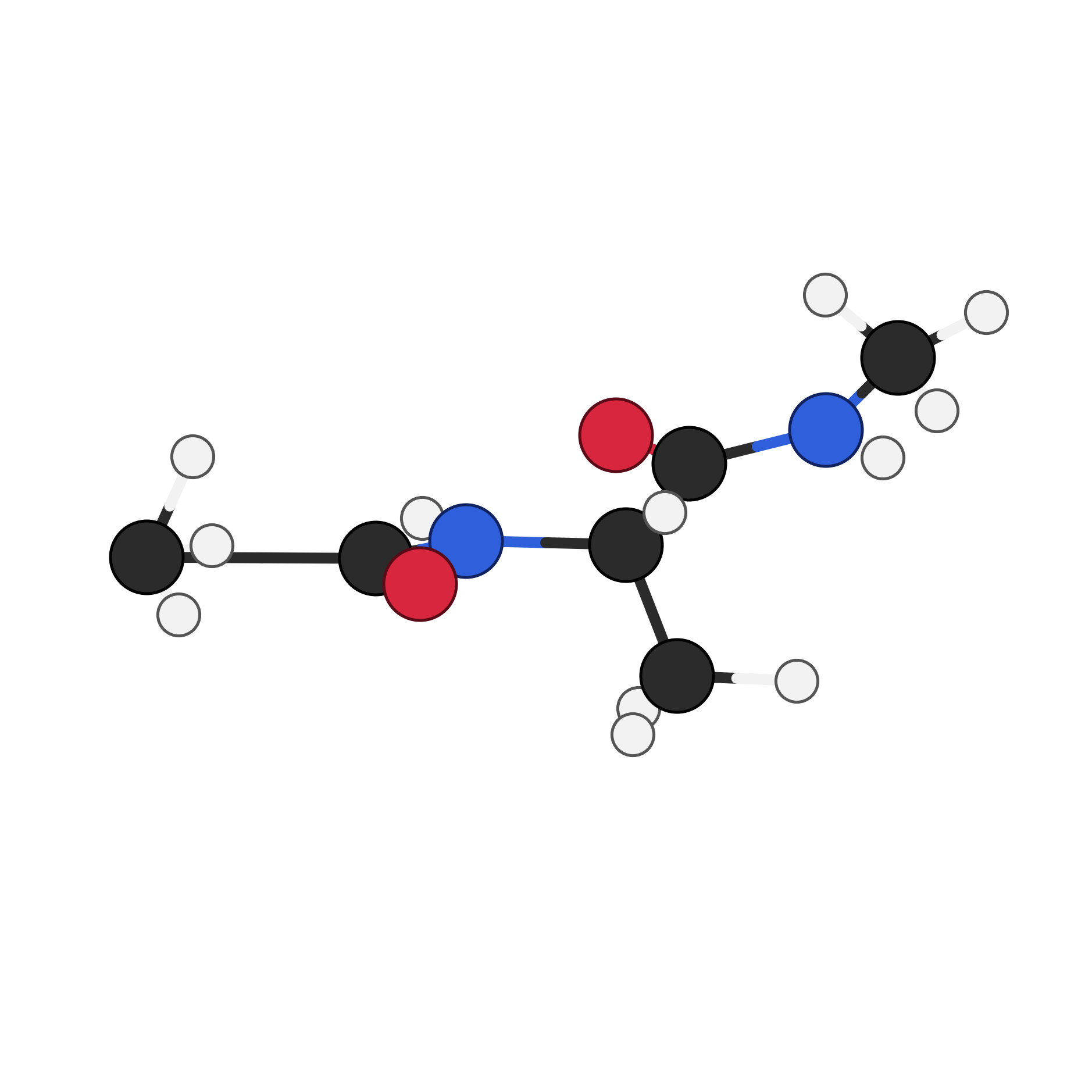
Agent-Guided Variance Reduction for Protein Kinetics
An agentic search driven by Claude Code selects the weight-control scheme that tames path-weight degeneracy, recovering the alanine dipeptide isomerization rate to within 3–6% of brute-force MD.
Notes
-
Reinforcement Learning [Poster]
Stanford, Winter 2026
-
Mathematical Finance [PDF]
Stanford, Winter 2026
-
Computational Methods of Applied Mathematics [PDF]
Stanford, Winter 2026
-
Advanced Physical Chemistry [PDF]
Stanford, Winter 2025
-
Finite Element Analysis [PDF]
Stanford, Winter 2025
-
Introduction to Statistical Mechanics
Problem Session Notes [PDF]Stanford, Winter 2025
-
Introduction to Non-Equilibrium Statistical Mechanics [PDF]
Thermal Activation of Dislocation Glide [PDF]Stanford, Fall 2024
-
Numerical Linear Algebra [PDF]
Stanford, Fall 2024
-
Defects and Disorder in Materials [PDF]
Stanford, Spring 2024
-
Elasticity and Inelasticity [PDF]
Stanford, Spring 2024
-
Stochastic Differential Equations [PDF]
Stanford, Winter 2024
-
Partial Differential Equations [PDF]
Stanford, Winter 2024
-
Linear Algebra [PDF]
Stanford, Fall 2023
-
Applied Quantum Mechanics [PDF]
Stanford, Fall 2023
-
Waves in Solids and Fluids [PDF]
KAIST, Fall 2021
-
Mechanism Design [PDF]
KAIST, Fall 2021
Adventures
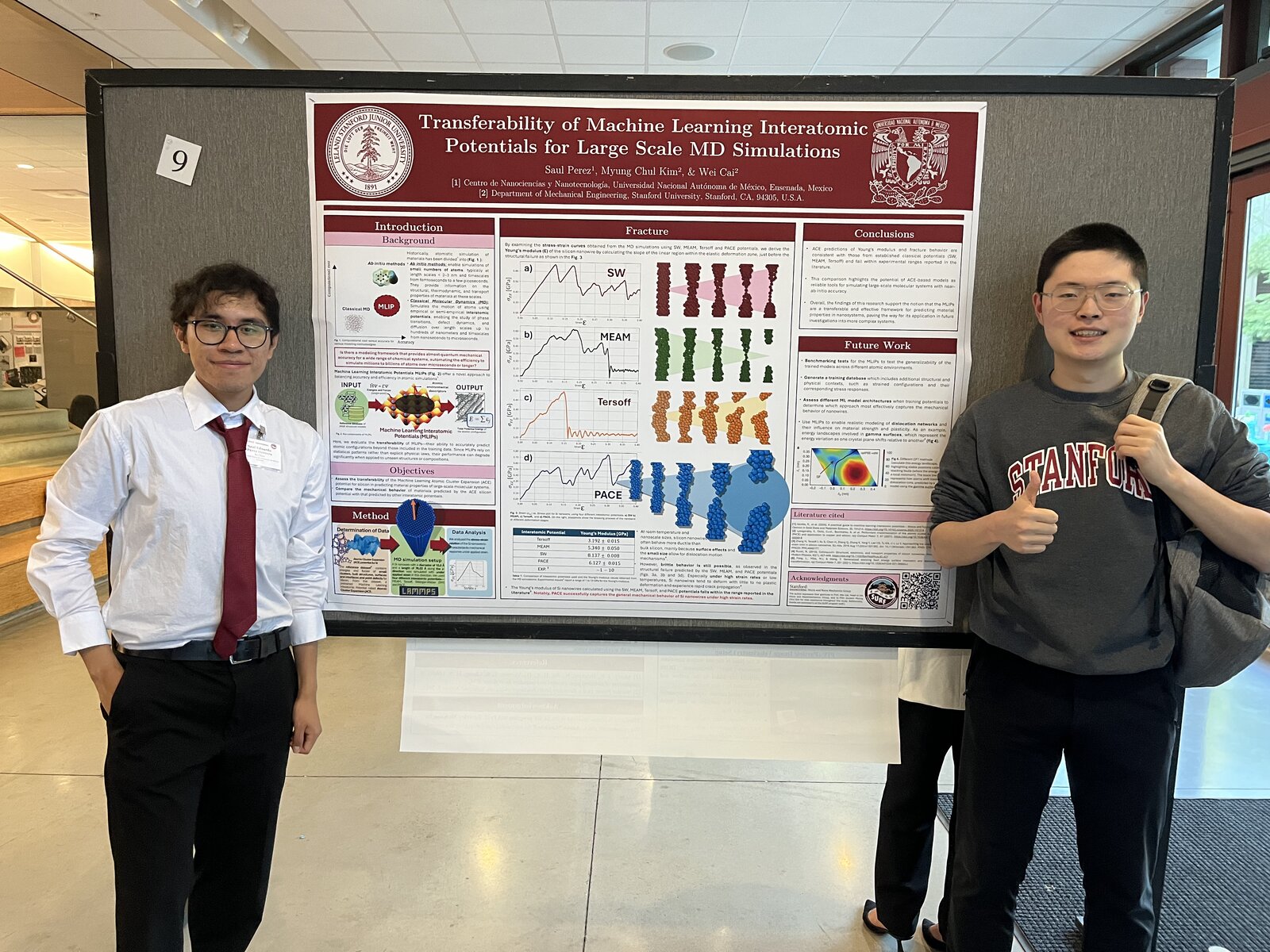
SURF 2025
Summer Undergraduate Research Fellowship Program
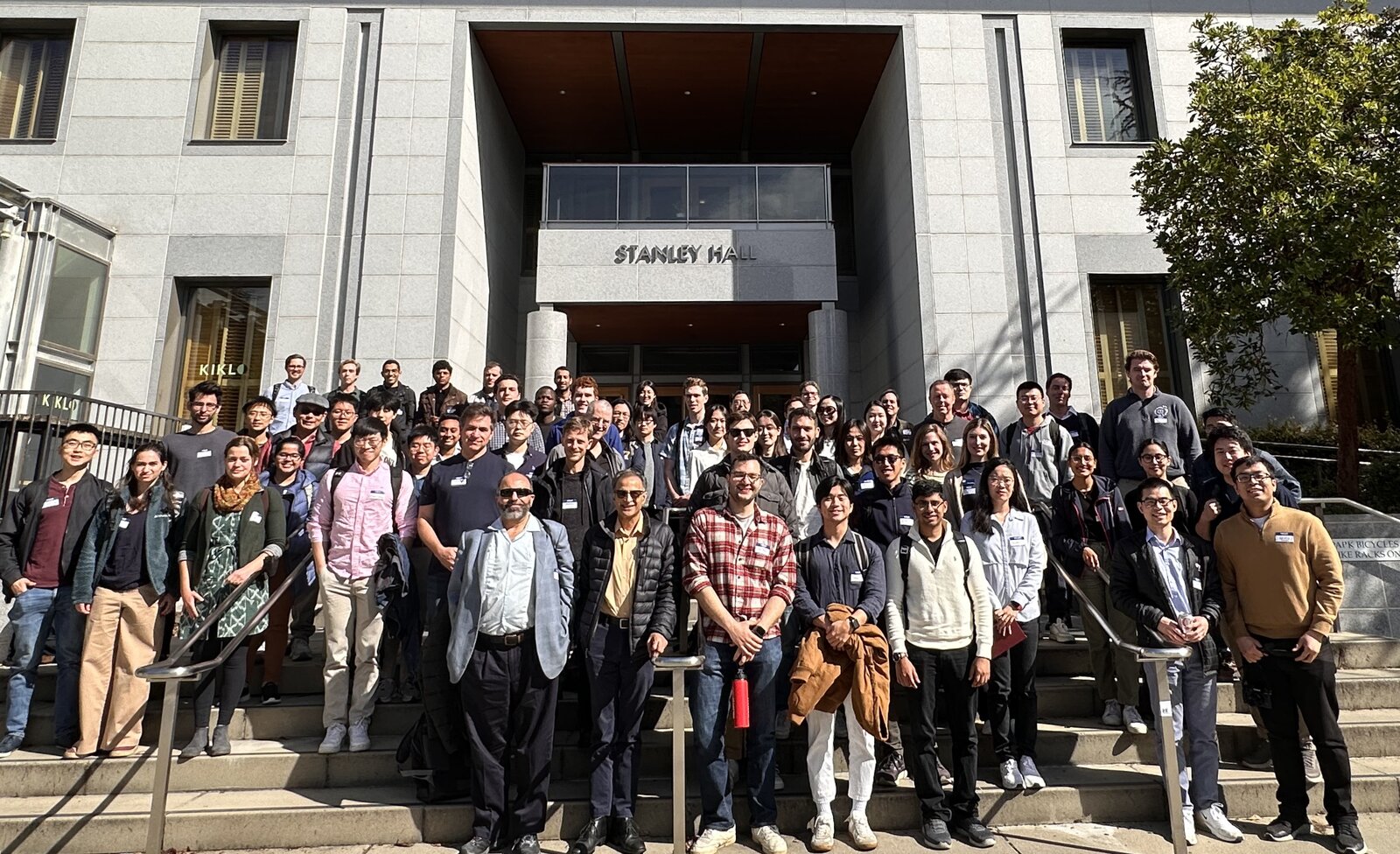
Compfest 2025
Computational Mechanics Festival
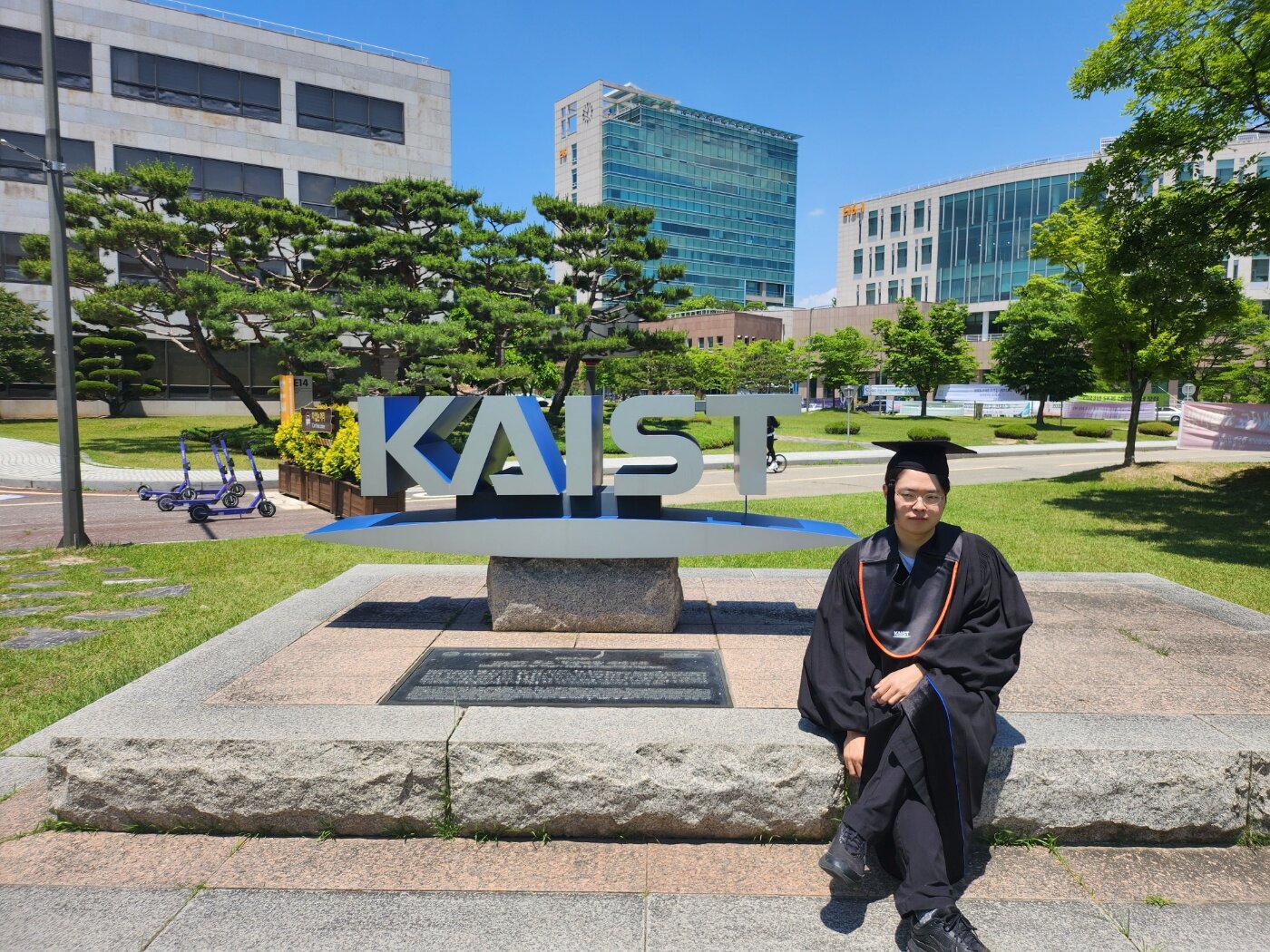
Graduation 2023
Graduation Ceremony
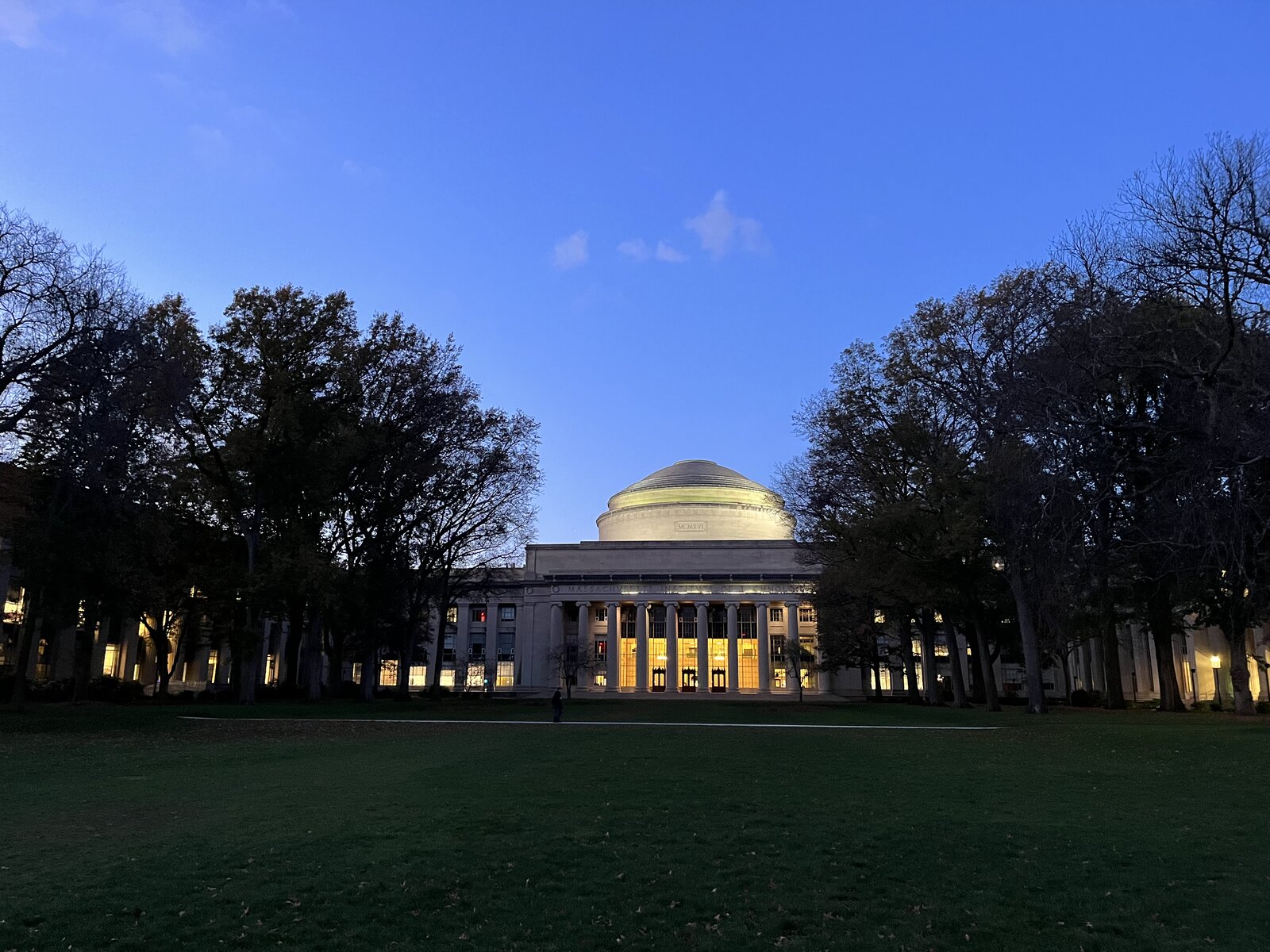
Boston 2022
Traveling Boston
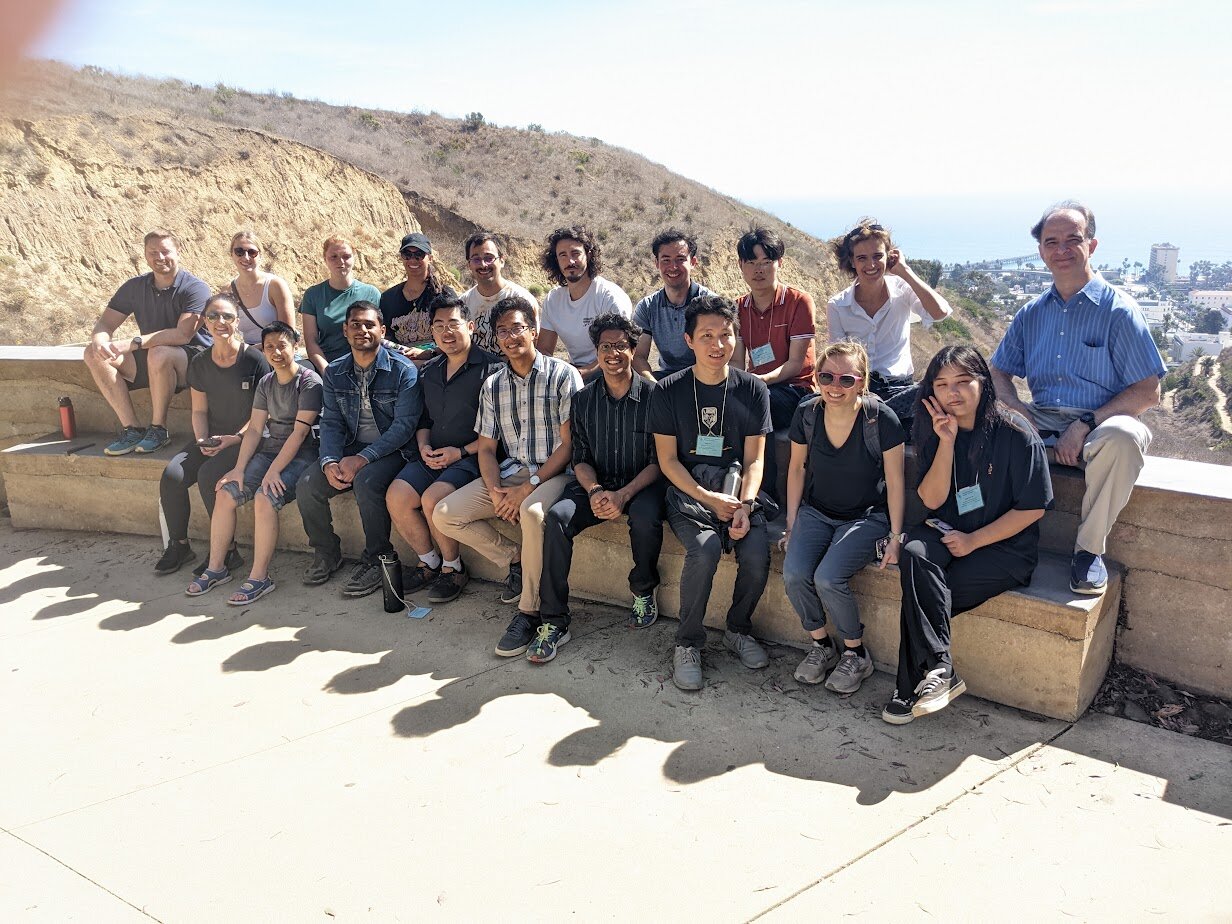
GRC 2022
Gordon Research Conference
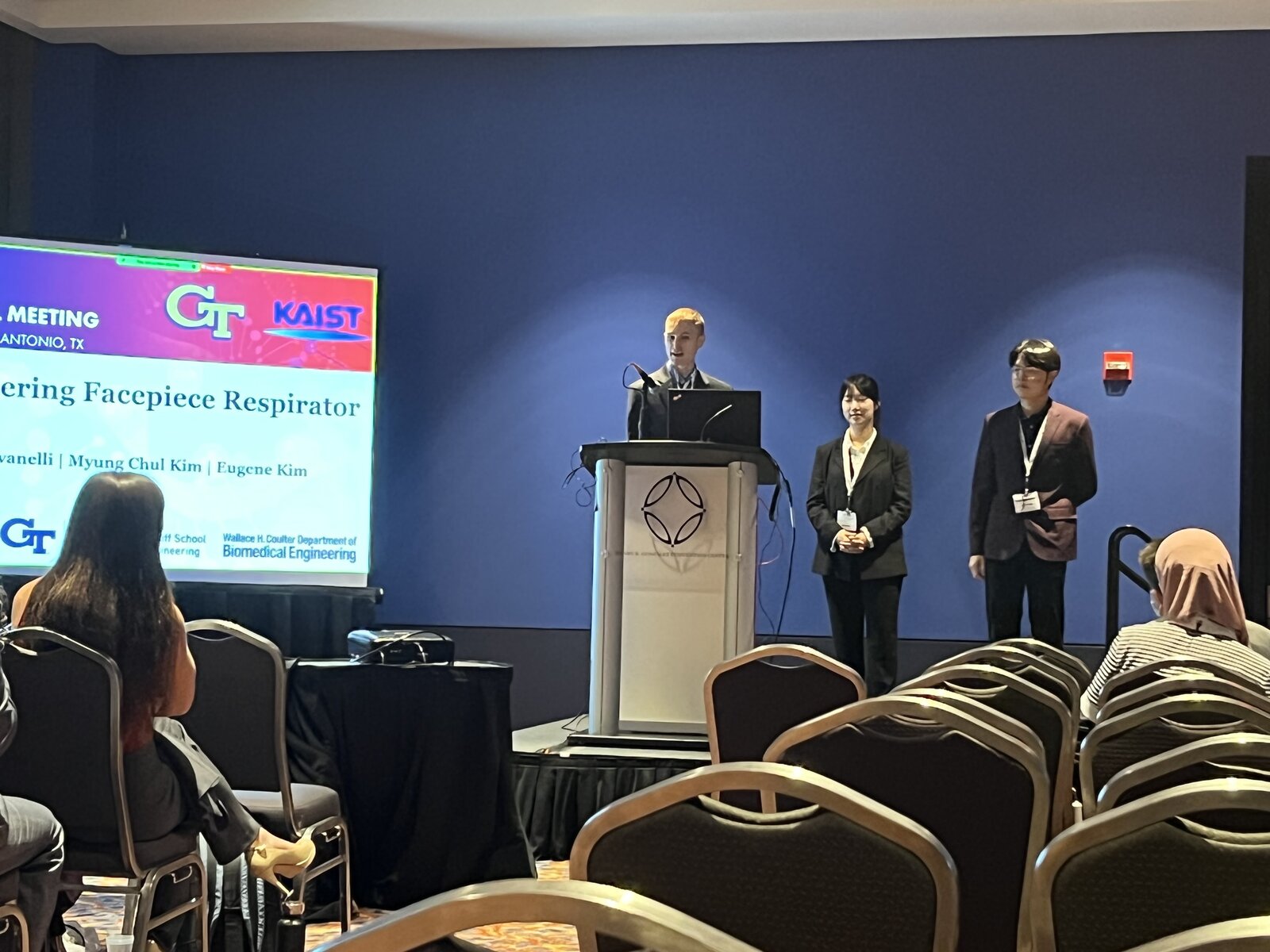
BMES 2022
Biomedical Engineering Society Annual Meeting